Collective Confidence Index
The score tells you what happened.
The CCI tells you what’s coming.
Ten questions on how your team works right now. Takes about ten minutes. You'll get a read on where your team's confidence is strong, where it's fragile, and what to do about it first.
About the research
Where this comes from
The Collective Confidence Index comes from Chapter 2 of Collective Confidence, and from the survey behind it. I surveyed more than four hundred team members and leaders, from healthcare and manufacturing to tech and financial services, to answer one question: what actually drives collective confidence inside real teams? Six principles emerged as the strongest predictors of belief.
- Build belief in every team member.
- Put everyone's genius to work.
- Create low-stakes ways to win together.
- Borrow brilliance that sets the bar.
- Turn learning into a team sport.
- Make everyone the boss of something.
Then I added group process to the model, and the picture changed again. Process either amplifies or mutes whatever belief a team has built. The fuel matters. So does the engine.
That is why the Index measures three things, not one.
Cluster A. The six principles in action. One statement per principle. This is the fuel: whether the conditions that produce belief are live in your team right now.
Cluster B. Overall confidence. Two statements on whether you believe this team can reach its most ambitious goals and come out of hard moments stronger. This is belief itself, measured directly.
Cluster C. Group process. Two statements on how information moves and how you work together (how you communicate, decide, resolve conflict, recognize contributions, etc.). This is the engine that converts belief into action.
Every score here is reproducible by hand from the scoring guide in the book.
Why it matters. Belief runs ahead of results. Teams start winning after confidence takes root, not before, which makes belief the earliest performance signal a leader gets and the one almost nobody tracks. Ten minutes tells you where your team's confidence is strong, where it is fragile, and what to do next. Think of it less like a test and more like checking in on your team's vital signs.
This version scores one person's answers, a team member or a team leader. There is no team report. Print the Index when you want the whole team's numbers in the room.
Before you start
Answer for the team you have today
Rate each statement from 1 (strongly disagree) to 6 (strongly agree), based on how you personally experience the team right now—not how you wish it were or how it used to be.
Ten statements. No right answers.
The more candid you are, the more useful this is.
1 of 10Cluster A
Press 1–6 to answer · ← to go back
Step 3 of 3 · Optional
Four quick things
We're building a benchmark of how teams score. These help us place yours against teams like it. All optional.
Where should we send this?
Your result appears on the next screen either way.
Your result is calculated in this browser. When you finish, we store your answers, optional context, and usage information without your email in the assessment record, and may retain that record indefinitely to build the benchmark. If you request the result and reminder emails, a separate contact record links your address to the assessment for up to 24 months; a newsletter-only contact is not directly linked. You can ask us to remove your records at any time at andre@teamand.co. Privacy notice
Your pattern
—
—
Your Collective Confidence Index
—of 60
—
This is your read. The point of the index is the conversation it starts. Take these numbers to your team, look at the spread between what you see and what they see, and give it twenty minutes of honest conversation.
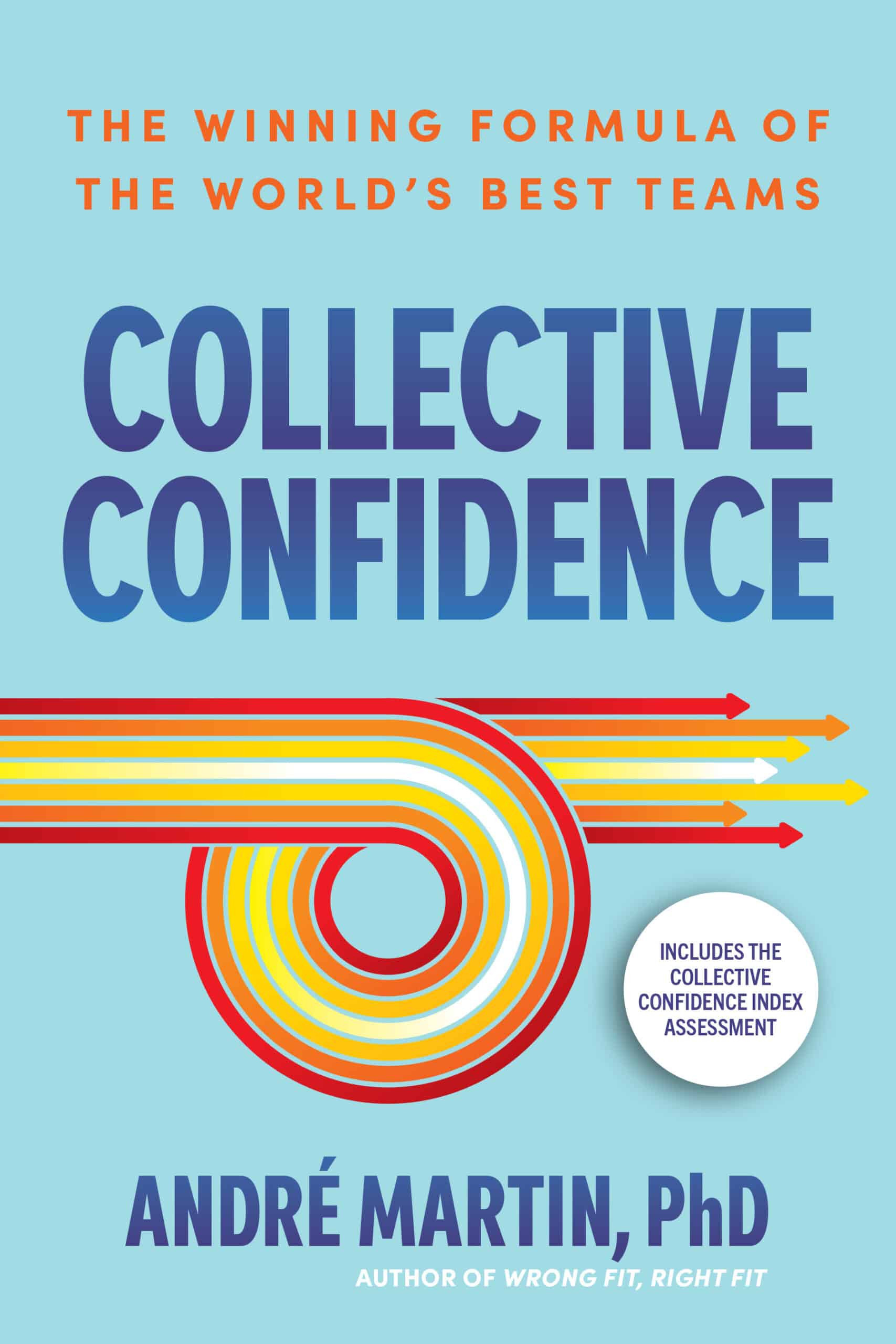
This index comes from the book
Chapter 2 has the full instrument, the scoring guide, and the six principles this result points you at.
Get the bookReruns aren't matched across sessions yet. Save or screenshot this page so you can compare it in ninety days.
Take this to your team
You’ve seen your read. Now find out if they share it.
The gap between how you experience this team and how they do is the finding. Run the index with them, bring the scores, and give the numbers twenty minutes of honest conversation.
A printable PDF with the ten statements, the scale, and the scoring guide, so a team can run it around a table.
Opens an email to andre.martin@lead3r.com with your read already in it, so you don’t have to explain it twice.